BusScopr
A mobile application designed to simplify public transportation by helping users locate nearby bus stops, compare routes, and understand arrival times with minimal effort.
Role
UX/UI Designer
Responsibilities
User Research · UI Design · Interaction Design · Prototyping · Usability Testing
Timeline
2023
Background
Public transportation apps often prioritize route information over usability, making it difficult for commuters to quickly answer simple questions like "When is my next bus?" or "Which route should I take?" BusScopr was designed to reduce that friction by surfacing the most relevant information first.
Project Scope
BusScopr leverages existing bus tracking technology provided by the city. The goal is to use this data and develop a user-friendly application to make it accessible to everyone.
User Research
Through user interviews and research, I identified two primary user goals:
- Planning a journey to a destination.
- Determining when the next bus will arrive at a nearby stop.
Key Insights
- Most participants primarily use bus tracking apps to obtain bus arrival time information
- On average, participants rate the accuracy of bus arrival time information as moderately high
- The majority of participants desire the addition of real-time bus location tracking on a map as an enhancement to their current bus tracking method
Defining the Experience
Designing the Journey
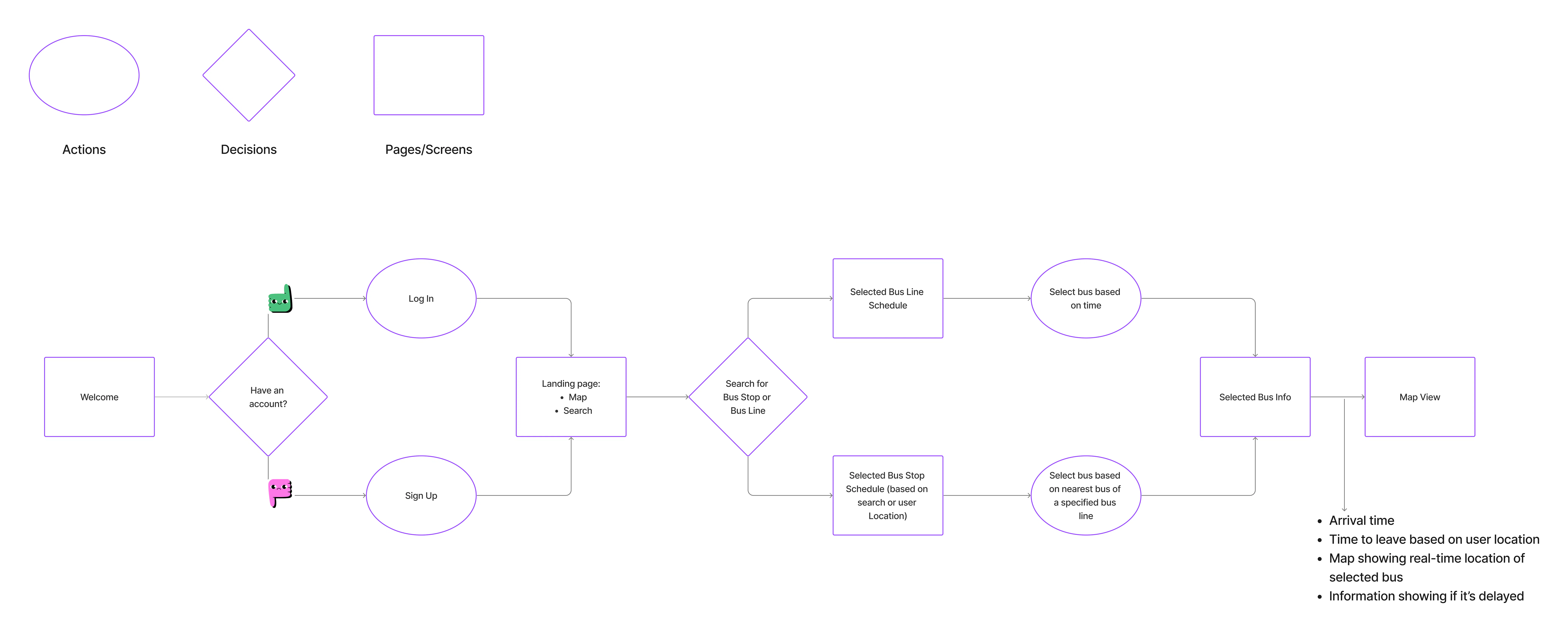
I explored a couple of different paths based on user needs at the time of using the app: planning a route and knowing when the next bus will arrive.
Early Concepts
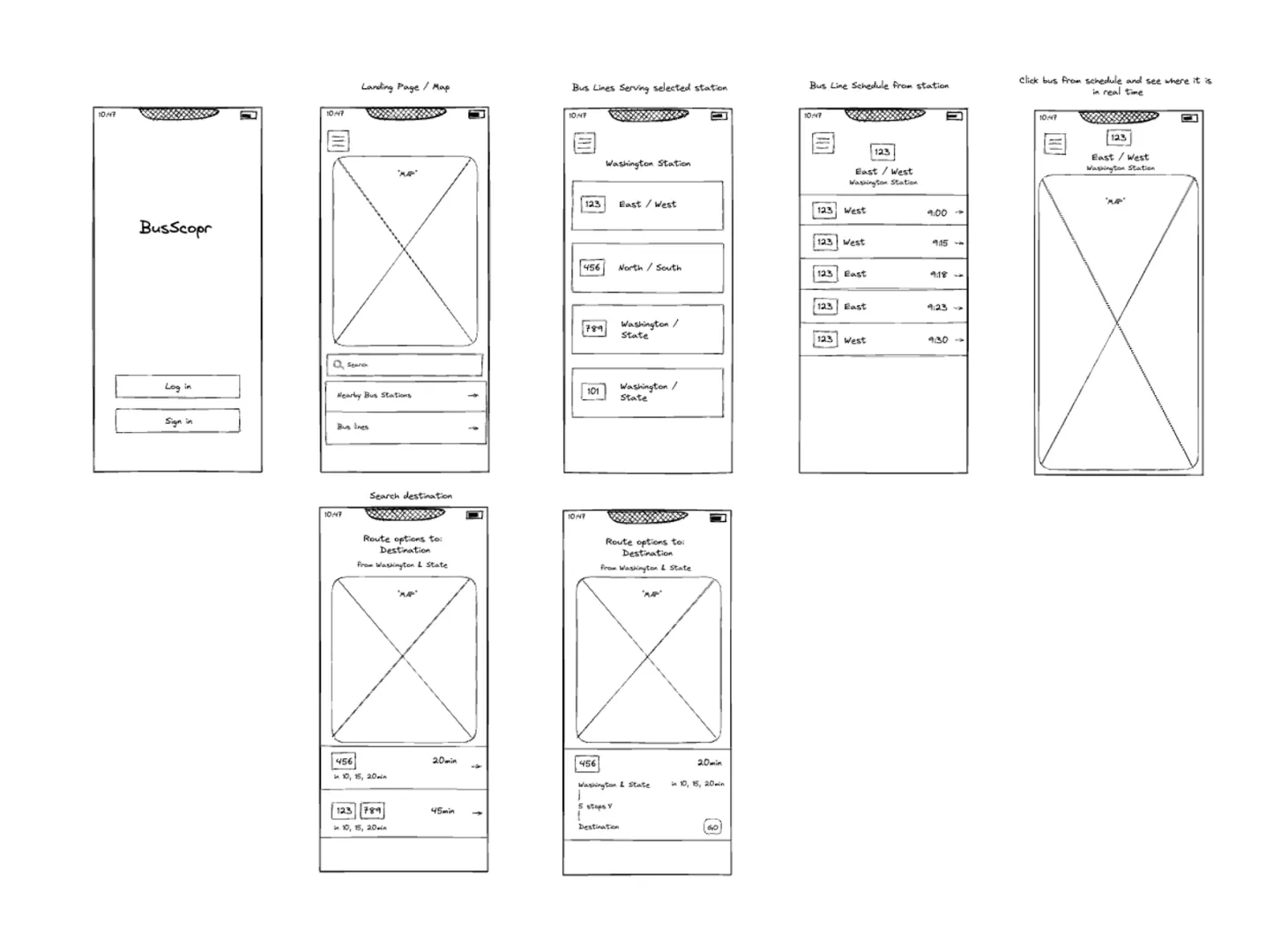
Route details are provided for additional trip-planning assistance. Each station has a detailed schedule view for a bus route and the entire route at a glance.
Final Design
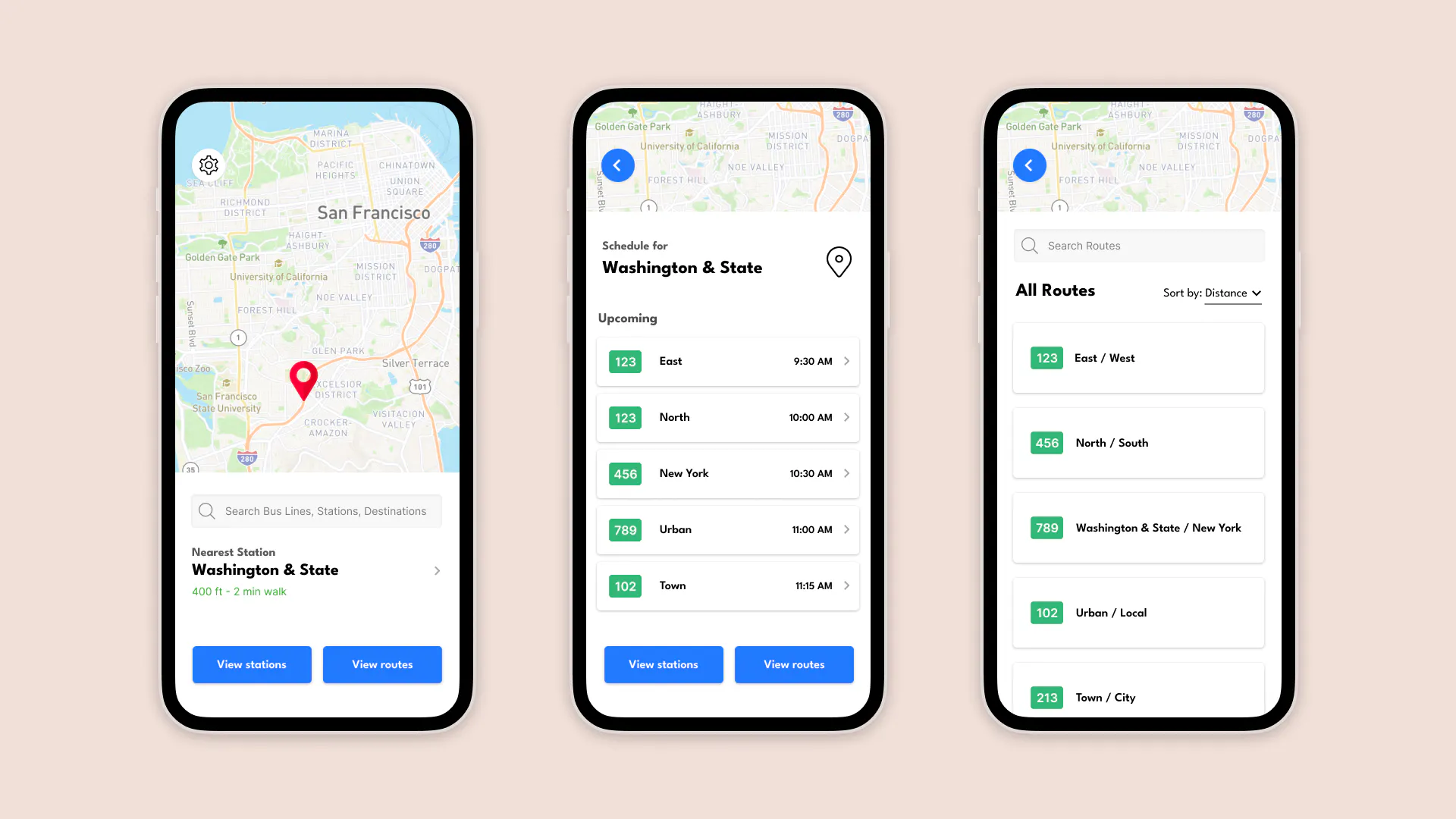
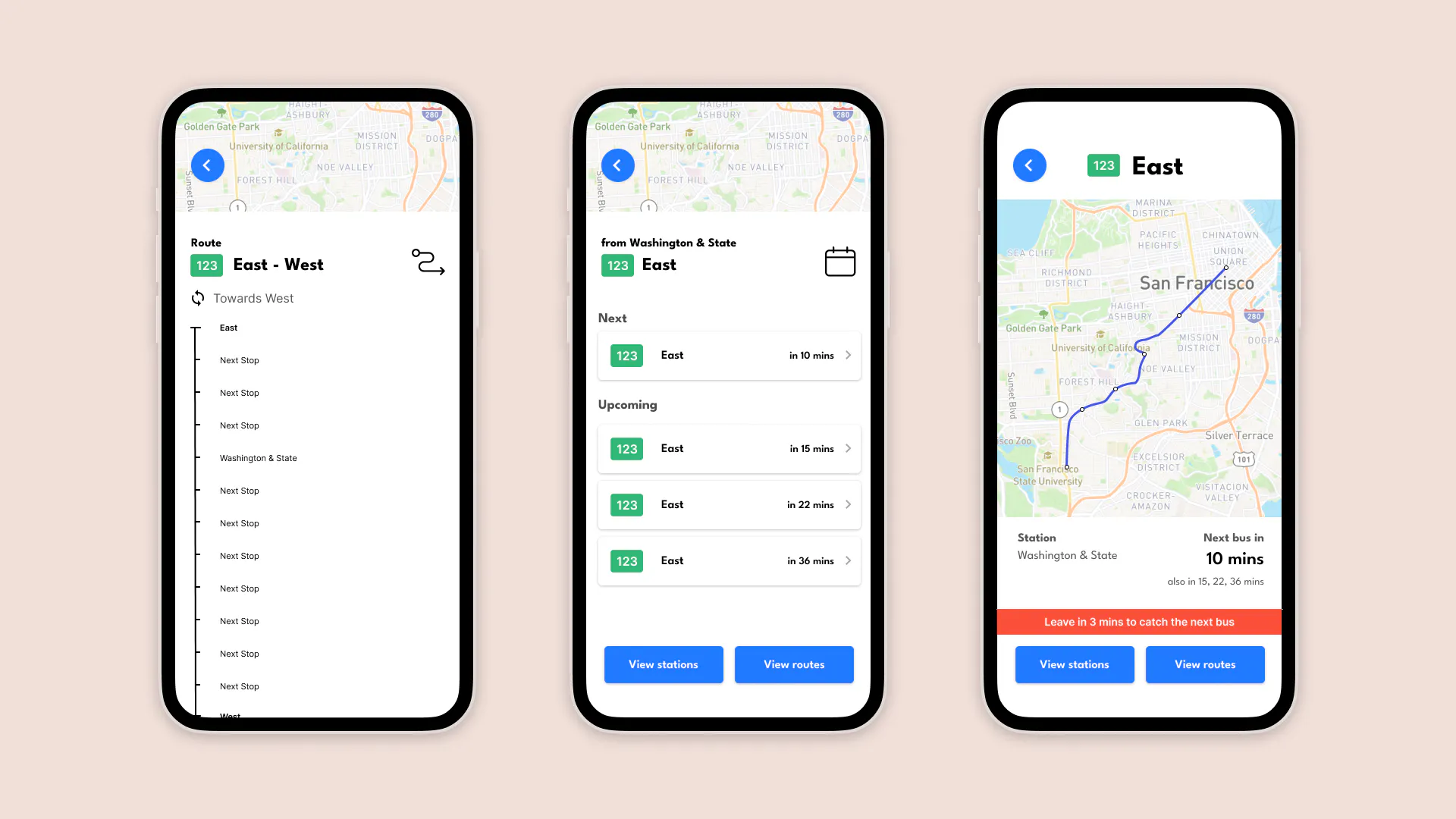
After considering the user research and feedback, I developed these high-fidelity prototypes to properly visualize the user experience.
Design Decisions
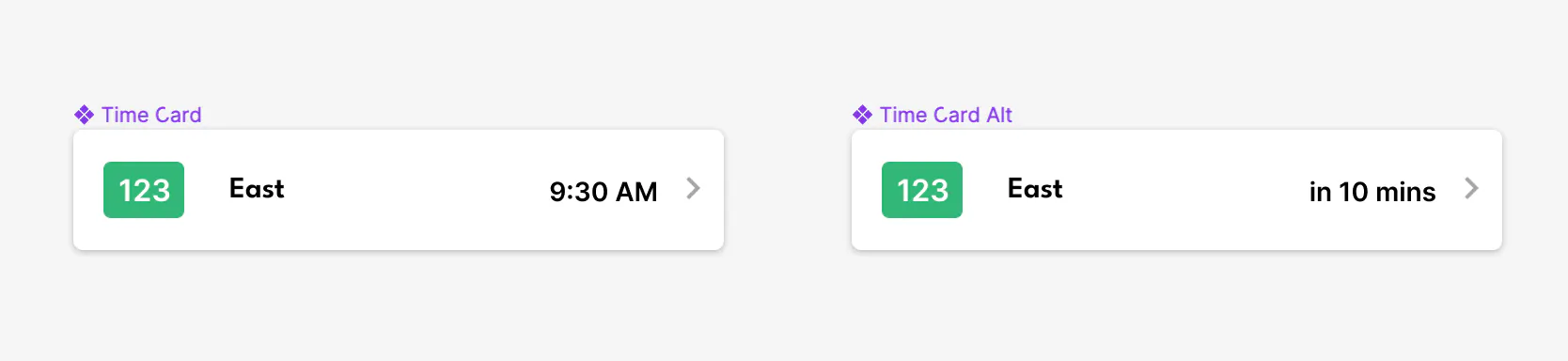
Surfacing Critical Information
Bus arrival times became the primary interaction because users consistently wanted immediate answers rather than navigating multiple schedules.
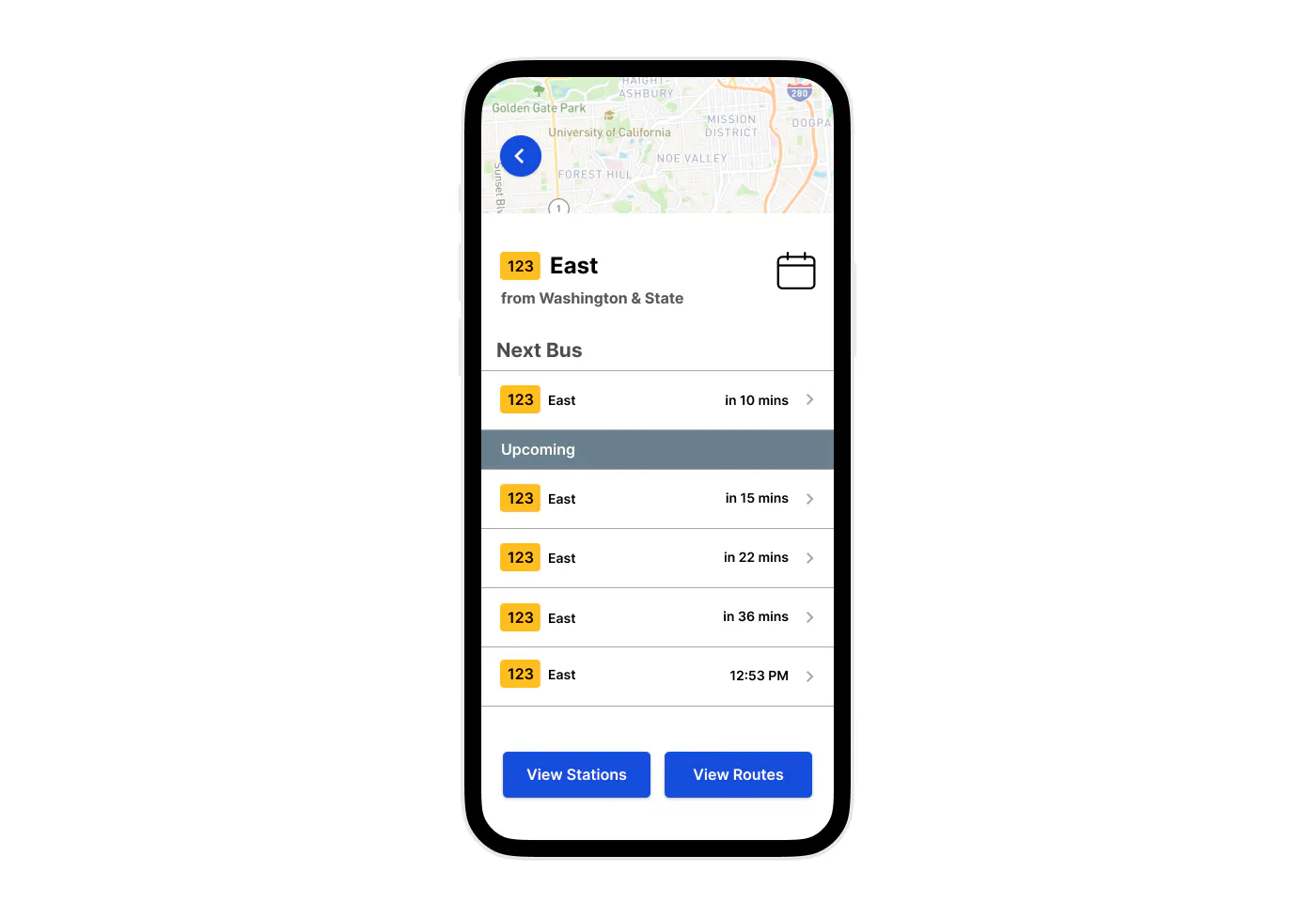
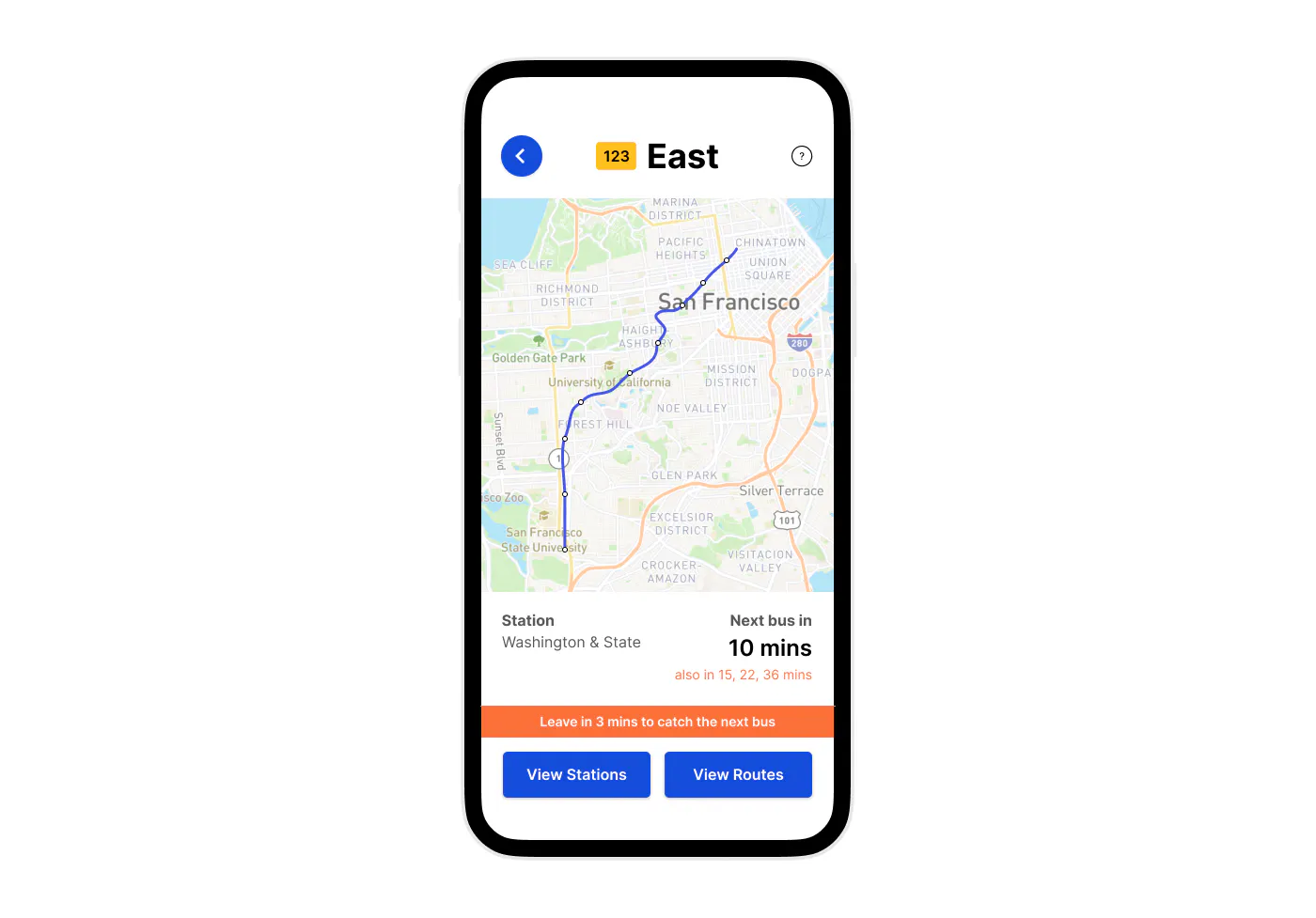
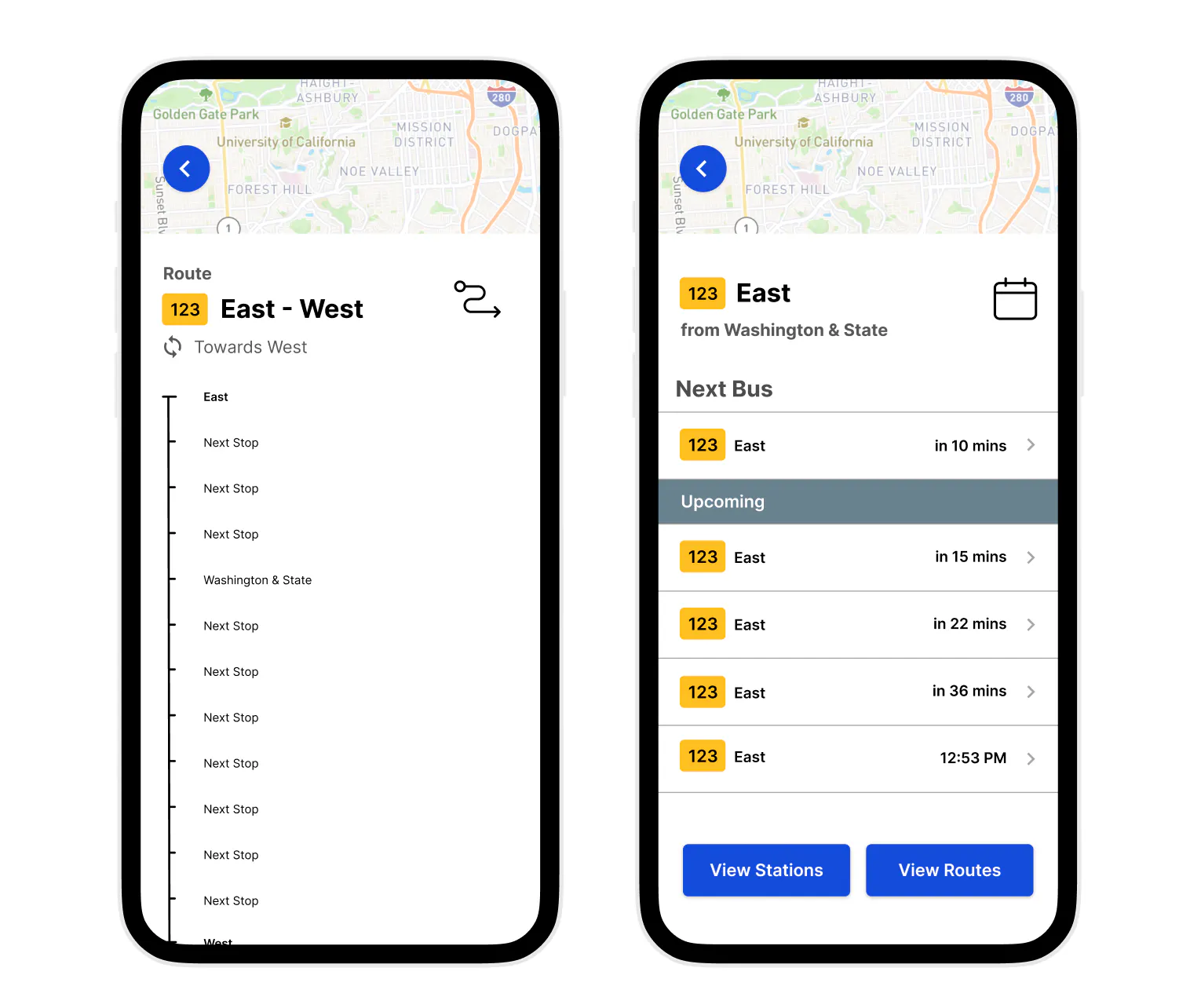
Users will know which is their nearest bus station at all times and can access the route schedule with accurate timings. They also can search for a specific station or route to plan their journeys.
Visual Design
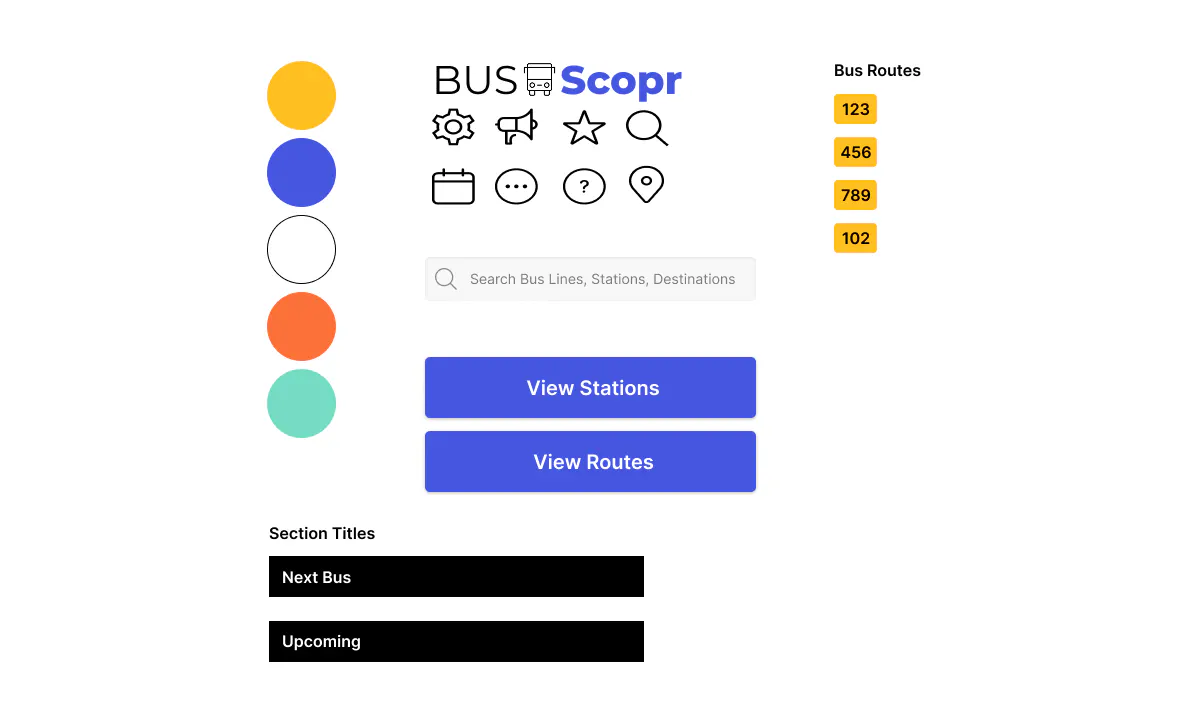
For the visual design I considered a high-contrast color palette and used it to divide each component by its function: clickable, information only, banners, etc.
Reflection
BusScopr reinforced the importance of starting with user needs rather than interface ideas. Research informed the navigation, user flows validated the experience, and iterative design helped transform those insights into a streamlined mobile application.